Get Started
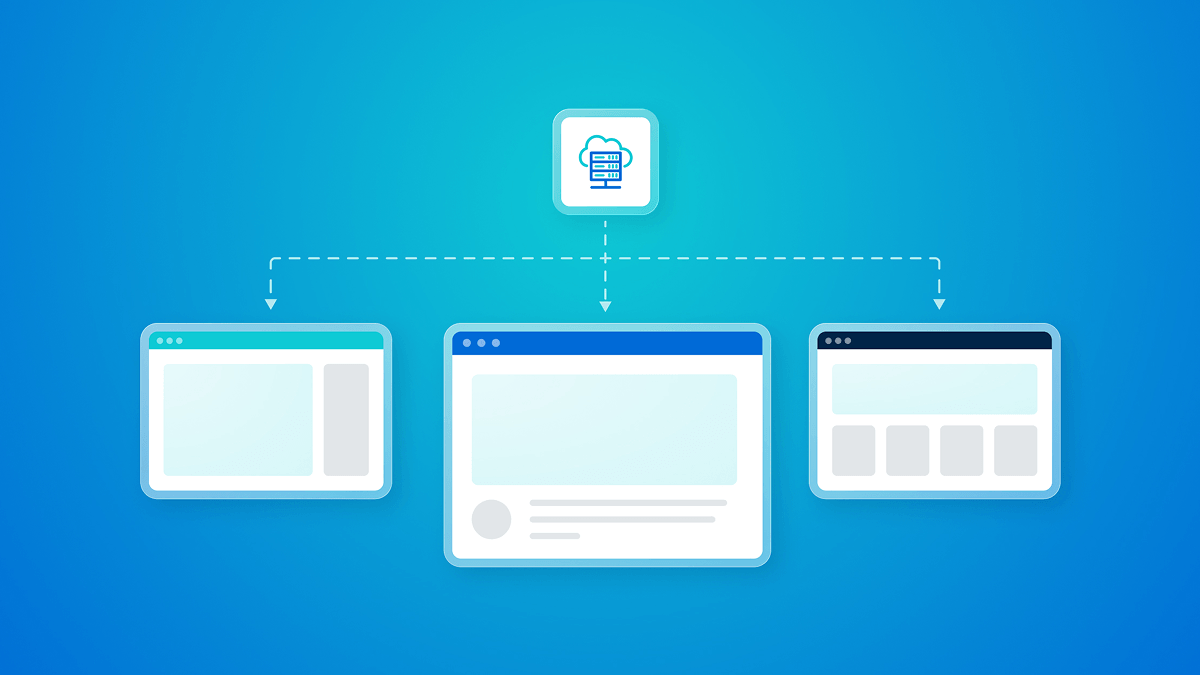

When building web and digital experiences for your clients, hosting is a critical component of success. How that hosting is provided has no universal right answer. Some clients or agencies roll their own servers. Some clients walk in with an existing hosting relationship with a third party. Often the best results come when the agency building the technology is able to control what hosting is used.
That said, an agency controlling the hosting can still work several different ways. Many companies prefer to manage their own hosting relationships. These companies will usually ask the agency to refer them to the host and plan that best fits their needs. Some brands prefer to allow the agency to handle hosting to reduce the number of vendors they’re juggling. When that’s the case, agencies usually resell a hosting provider’s offerings. Depending on how the agency prefers to present themselves, they may choose to white label the hosting provider’s offerings.
Why do agencies choose to white label?
White labeling is a business decision to sell another company’s offerings as your own. This can be done when the web host provides services with the ability for the agency to add their logos and branding to dashboards or communications. This ensures that when the agency’s end client interacts with the hosting, it appears to come directly from the agency.
For a growing digital agency, this can be a critical strategic decision. Any vendor an agency chooses to partner with must be able to deliver on the commitments made the end clients. This means choosing the right white-label hosting partner is fundamental to your agency’s reputation and profitability.
White-labeling is a crowded market, but making the wrong choice can lead to slow websites, security nightmares, and frantic clients. All of this reflects poorly on your brand.
The solution is to approach this decision not as a search for a true strategic partner. A great white-label managed hosting partner doesn’t just provide servers. They provide a platform for growth, with tools and support that allow you to sell premium hosting under your name.
This guide provides a clear checklist of what truly matters when selecting a white-label hosting partner. Use it to ensure you find a solution that enables seamless branding, delivers top-tier performance, and helps you build a more profitable agency.
Understanding white-label hosting for agencies
White-label hosting is a model where you purchase hosting and resell it to your clients under your own brand. Clients see your agency’s name on invoices, while the underlying infrastructure, maintenance, and server-level support are handled by your provider.
For many agencies, this model is a powerful tool for growth. It can help them position themselves as a strategic partner to their clients.
- It reinforces your brand: Offering a complete, branded solution from website design to hosting strengthens your agency’s identity. It helps position you as a comprehensive digital partner. According to a global survey by Zendesk, 60% of consumers base their purchasing decisions on the level of service they expect to receive, and a seamless, branded experience is a key part of that service.
- It creates recurring revenue: Project-based work leads to unpredictable cash flow. A portfolio of hosting clients creates stable, predictable monthly recurring revenue (MRR). This is a critical metric for business health and valuation.
- It increases client stickiness: When you manage a client’s hosting, you become deeply integrated into their business operations. This makes your agency’s services indispensable and dramatically increases client retention.
- It gives you control and consistency: You maintain control over the hosting environment, ensuring every site benefits from the same high standards of performance and security.
- It lets you focus on your core competencies: You get to be the digital expert, not a server administrator. You can outsource the complex technical infrastructure and focus on what you do best.
Essential features to look for in a white-label hosting partner
True white-labeling capabilities
The entire experience should feel like it’s coming from your agency. This means looking for a partner that offers more than just reseller accounts. Look for offerings designed for agencies to manage client sites and build their own services on top of the platform. This effectively empowers you to create a branded offering. When vetting any partner, you will need flexible billing and client/site management.
Performance and reliability
Your reputation rests on the performance of your clients’ sites. Slow-loading pages can have a massive impact on business outcomes. Research by Deloitte Digital found that a 0.1-second improvement in site speed can boost conversion rates and average order value.
- Uptime guarantee: Look for a partner that offers a financially backed Service Level Agreement (SLA) of 99.9% or higher. For example, WP Engine offers a 99.95% uptime SLA.
- Speed optimization: The platform must be built for speed. This requires features like a global Content Delivery Network (CDN) and advanced caching layers like WP Engine’s proprietary EverCache®.
- Scalability: The infrastructure must be able to handle sudden traffic spikes without faltering. This ensures your clients’ sites stay online during their most critical moments.
Robust security
A security breach on a client’s site is a nightmare for any agency. Your partner must provide enterprise-grade, proactive security. A 2023 report from security firm Sucuri found outdated CMSs and plugins are among the top causes of website intrusions.
- Managed security: Your partner should provide a managed Web Application Firewall (WAF), proactive threat detection, and malware scanning.
- Free hack fix: A partner who is confident in their security will stand by it. Look for a commitment to fix your clients’ sites for free if they are ever compromised on the platform.
- Advanced security features: Leading platforms like WP Engine offer Global Edge Security, combining CDN, DDoS mitigation, and WAF to protect sites at the network edge. Catching threats before they can even reach the server.
- Bot mitigation: Look for a hosting partner who will be able to help identify and mitigate unverified AI-driven bot traffic.
Developer-friendly tools
Efficiency in your development workflow translates directly to profitability. Your partner should provide tools that make your team’s job easier.
- Comprehensive API functionality: With thorough and well-featured APIs, your team is able to create automations internally and for end clients.
- Staging environments: One-click staging environments are non-negotiable for safely testing updates and new features before pushing them to a live site.
- Local development integration: Tools that connect a local development environment to your hosting platform streamline workflows. Local by WP Engine allows developers to pull sites down from WP Engine, work offline, and push changes back up.
- Automation: Look for tools that automate tedious maintenance. Our Smart Plugin Manager uses AI and visual regression testing to safely handle plugin updates. This saves your team hours of manual work and helps prevents broken sites.
Comprehensive, expert support
When you have a critical issue, you need access to experts, fast.
- 24/7/365 expert support: The support team should be available around the clock and be true platform and CMS experts.
- Dedicated agency support: The best partners have support specifically trained to handle the needs of agencies managing multiple clients.
Ease of management and automation
As you scale, you need a platform that makes it easy to manage your entire client portfolio in one place.
- Intuitive dashboard: A centralized All Accounts dashboard for monitoring and managing all your client sites is essential for efficiency.
- Easy client handoffs: Look for features that simplify transferring a site to a client once a project is complete. Our Transferable Sites feature allows you to build on your account and seamlessly transfer ownership and billing, when needed.
- Scheduled reports: Ideally, you’ll want scheduling options that include weekly, biweekly, and monthly. It should also include an open email field to include which addresses will receive the report.
- Detailed site performance metrics: In addition to overview-level metrics, your clients will appreciate deeper insights. These can include metrics such as page requests, error rates, Edge vs. Origin, cache details, and latency reports.
- White-labeled reports: Look for reusable report templates to deliver brand consistency with white-labeled high-value insights across your client portfolio.
Pricing and profitability
Your partner’s pricing model must allow you to create profitable hosting plans. Look for a partner with a dedicated agency hosting plan that offers features designed to help you grow your agency.
Questions to ask potential white-label hosting partners
- What are your specific features that support agencies reselling your services?
- What is your guaranteed uptime, and how is it measured?
- What specific security measures (WAF, malware scanning, etc.) are included in your plans?
- What tools do you provide to make site migrations easier?
- What are your average support response times for agencies?
Conclusion
Choosing a white-label hosting partner is one of the most important decisions your agency will make. This partner is an extension of your own brand. When you choose well, they become a cornerstone of your service offering, and a key factor in your scaleability.
Don’t settle for a simple reseller account from a generic host. Look for a true strategic partner. They should provide the performance, security, support, and agency-centric tools you need to build a thriving, profitable hosting business.
Use the checklist above to thoroughly vet potential partners and find one that truly aligns with your agency’s goals. Ready to build your hosting offering on a platform designed for agency success? Explore the WP Engine Agency Partner Program and get the tools and support you need to grow your business.